When Time Matters — A Preliminary Order That Protects Due Process
In immigration matters, time can be decisive. A decision made in hours—or even minutes—can change the course of a person’s life. That’s why every legal tool available, when used properly, can make a real difference.
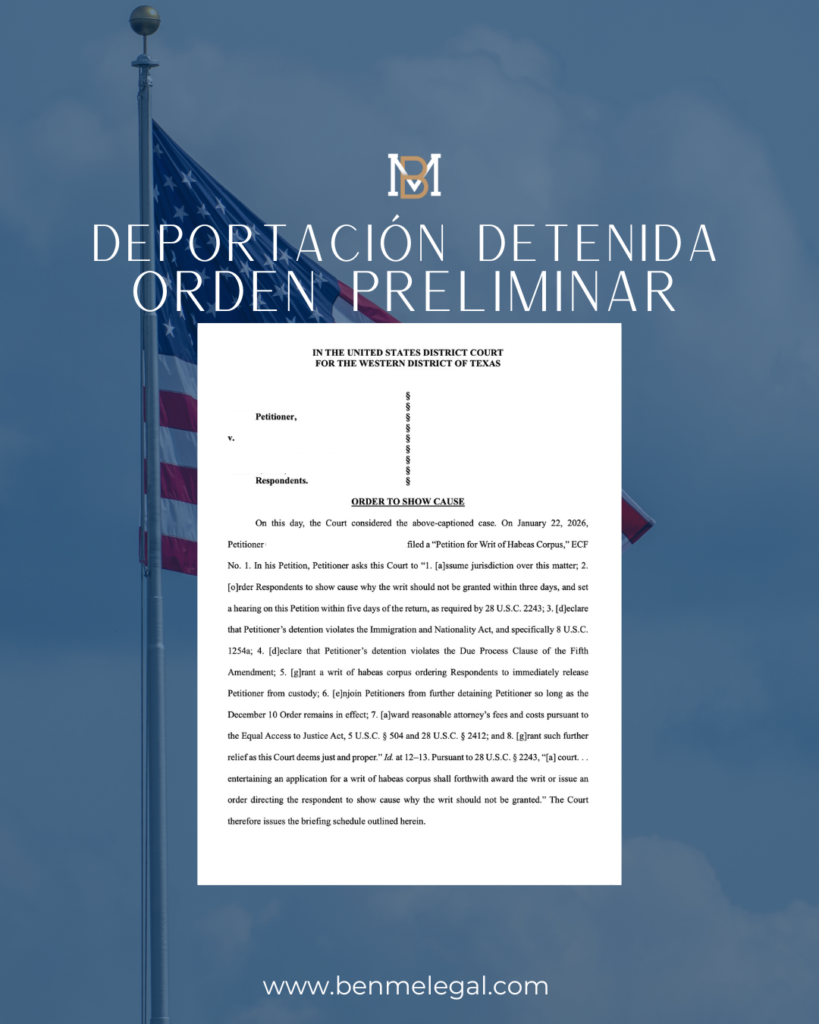
Recently, through a well-founded legal strategy, a preliminary order was obtained that temporarily stopped the deportation of a detained individual. While this type of order is not a final outcome, it provides a critical layer of protection: it pauses an immediate action and ensures the process continues with proper legal review and respect for due process.
Preliminary orders play an essential role within the legal system. Their purpose is to preserve the current situation while legal arguments are reviewed, potential rights violations are evaluated, and the individual’s story is given the opportunity to be heard by the appropriate authorities.
In immigration cases—where procedures often move quickly—these measures can provide something invaluable: time. Time to submit evidence, strengthen legal arguments, and ensure decisions are not made automatically or without full consideration.
Behind this result is careful legal preparation, detailed analysis, and a strong sense of professional responsibility. Every filing before a court requires solid legal grounds, technical knowledge, and a clear understanding of the human impact behind each immigration case.
While preliminary orders do not resolve a case permanently, they allow the process to move forward within the proper legal framework. They represent an intermediate—but essential—step in protecting the right to a fair process and to be heard.
Immigration law is not measured only by final outcomes, but also by these actions that ensure the law is applied with rigor, balance, and respect for fundamental rights.
Share:
Previous Post
TPS and Refuge — What Is Really Happening and Why Understanding the Legal Context Matters
Newer Post
The Arrest of Nicolás Maduro and the Future of Venezuelan Asylum — What’s Really at Stake