

ICE Detentions: What the Colombian Community Needs to Know Right Now
By Khyrsi Prosperi-Quintana, Associate Attorney at Benme Legal
Immigration detentions in the United States remain at record levels, and the Colombian community is no exception. According to reported figures, about 1,400 Colombians were detained in July, an average of 45 a day, and more than half had no criminal convictions. Most of the arrests are concentrated in Texas and Florida, two states with large Colombian communities and heavy immigration enforcement activity.
It’s not just about criminal records
Enforcement policy has changed. ICE used to focus its resources on people with criminal records or who posed a public safety risk. Today, not having a conviction doesn’t guarantee you won’t be detained. Neither does a pending asylum application or a valid work permit: while they allow you to stay and work while your case moves forward, they don’t necessarily give you immigration status. That’s why we’re seeing people who have shown up to every appointment and kept up with every filing still end up detained.
If you can’t find your loved one
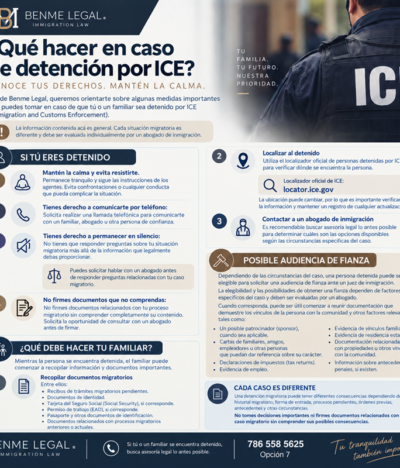
If someone doesn’t show up in the ICE detainee locator, that doesn’t mean they’ve already been deported. Since mid-September, there have been more reports of detainees, especially those with final orders, whose location isn’t publicly listed. If the person manages to call, ask where they were detained or where they’re calling from. Search the locator using their A-Number, and if nothing comes up, try their full name, date of birth, and country of birth. If there are still no results, contact the ERO office with jurisdiction over the place where they were detained, and reach out to an attorney right away.
A deportation order isn’t always the end of the road
Before assuming a deportation is imminent, the entire case history needs to be reviewed. A person can have a final order and, at the same time, have withholding of removal or protection under the Convention Against Torture, which prevents them from being sent to a specific country. It’s also possible to ask ICE for a stay of removal by filing Form I-246.
Knowing your situation is your best defense
If you’re here on a tourist visa or another temporary status, you need to know how long you’re allowed to stay and keep your passport and I-94 record handy: having a visa doesn’t mean you’re still in status. If you have a pending application or you’re transitioning between statuses, you need to understand your risks before any interaction with ICE.
Benme Legal’s take
“It’s not about living in fear, but about not ignoring reality,” says the Benme Legal team. Know your situation, have your documents ready, and get legal guidance before a detention ever happens.